Multi-Needle vs Single-Needle: A 2026 Buyer’s Breakdown
Confused between a single-needle and a multi-needle machine? Here are real costs, speeds, and buying mistakes to check before you spend a dollar.
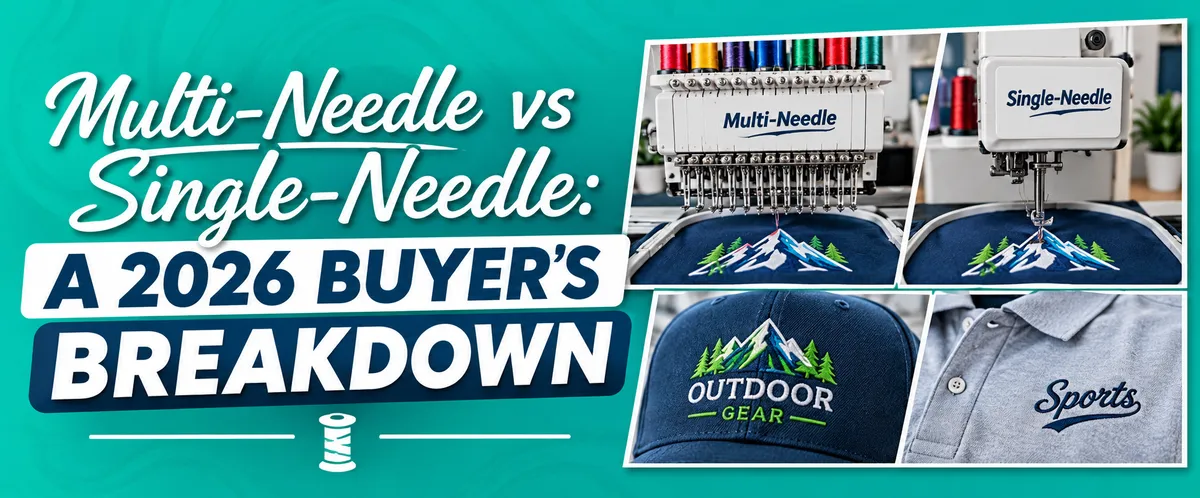
Picking between a single-needle and multi-needle machine in 2026 still trips up a lot of people who just want clean results without wasting money. The choice comes down to how many color changes you face each day and whether you need to handle finished garments or caps. After years of working with both types on everything from small personal projects to steady commercial runs, I can tell you the best multi needle embroidery machine only makes sense once your volume and design complexity push past what a single-needle can handle comfortably. That same experience also shows why solid custom embroidery digitizing files matter just as much as the hardware itself.
Basically, most buyers start with the wrong assumption. They look at sticker price first and ignore the hours they will spend changing thread or fighting tubular items. This breakdown sticks to what actually changes in daily work so you can match the machine to your real situation.
Which Machine Fits Your Business in 2026?
If you mostly do one or two colors on flat items and embroider a few times a week, a solid single-needle machine still works fine and keeps costs low. Once you start taking regular multi-color orders, need to stitch finished shirts or hats, or want the machine to keep running while you hoop the next piece, a multi-needle becomes the practical move. In 2026 the gap in daily output is clear. Multi-needle machines change colors on their own and run faster on commercial models, so the time you save on every order adds up fast.
Here is a simple way to decide right now:
You embroider mostly one or two colors on towels, patches, or flat blanks → stay with single-needle for now.
You regularly run four or more colors and customers ask for finished shirts → multi-needle starts making sense.
You need to stitch caps or left-chest logos on already-sewn garments → multi-needle is almost required.
You want the machine to keep stitching while you prepare the next item → multi-needle is the clear upgrade.
Your weekly piece count stays under 20–25 simple designs → single-needle still covers it without extra cost.
Core Differences Between Single-Needle and Multi-Needle Machines
Single-needle machines hold one thread at a time. You stop, cut, and rethread every time the design calls for a new color. Multi-needle machines hold 6 to 15 colors already loaded. The machine switches needles automatically and keeps stitching. That single difference drives almost everything else.
Thread Changes and Color Handling
On a single-needle you stay next to the machine for every color stop. A design with eight colors means eight stops and eight rethreads. On a multi-needle those same eight colors sit ready on separate needles. The machine moves to the next needle and continues. You only step in when the design finishes or a thread breaks. This is why multi-needle owners can hoop the next garment while the current one stitches.
Practical differences you notice right away:
Single-needle: every color change is a full stop and manual rethread.
Multi-needle: colors stay loaded and the machine switches on its own.
Single-needle: you must stay close for the whole design.
Multi-needle: you can walk away and come back when the piece is done.
Single-needle: more chance of tension shifts from repeated rethreading.
Multi-needle: each color keeps its own tension setting once you dial it in.
Speed and Daily Output
Most single-needle home machines run in the 400 to 650 stitches-per-minute range. Commercial multi-needle models commonly run 800 to 1200 stitches per minute on flat work and a bit lower on caps. The real gain is not just the higher speed. It is the lack of stops. A multi-needle finishes a multi-color logo while you prepare the next item. Over a full day the piece count climbs noticeably.
Real daily output differences look like this:
Single-needle on a six-color logo: frequent stops cut effective speed in half.
Multi-needle on the same logo: continuous stitching with only occasional thread breaks.
Single-needle: one person stays tied to the machine most of the day.
Multi-needle: one person can keep two or three garments in rotation.
Single-needle: higher chance of fatigue from constant rethreading.
Multi-needle: more mental space for quality checks and next-job prep.
Cap, Hat and Tubular Garment Support
Single-needle machines are usually flat-bed. Final shirts, sleeves, and bags are awkward or impossible without special setups. Multi-needle machines almost always come with a tubular arm and cap driver. You slide a final garment over the free arm or clamp a hat on the cap frame and stitch without fighting the body of the item. If your customers ask for caps or left-chest logos on finished polos, this difference decides the choice.
Key points on garment handling:
Flat-bed single-needle struggles with finished shirts and jackets.
Tubular multi-needle handles finished garments cleanly.
Cap frames on multi-needle machines make hat work practical.
Single-needle often needs special adapters that still feel limited.
Multi-needle free-arm design reduces fabric distortion on sleeves and bags.
Proper cap driver keeps the hat stable through the whole design.
What Each Machine Really Costs You
Price is more than the machine itself.
Upfront Price Ranges
In late 2026 a capable single-needle home machine sits between roughly $500 and $1800. Larger-field single-needle models climb toward 3,000–5,000. Entry multi-needle machines start around 5,000–6,000 for 4- to 7-needle models. 6 to 10 needle commercial units commonly land between $8,000 and $15,000. 15 needle commercial single-heads from established brands run higher, often $13,000 to $28,000 depending on field size and features. Chinese-sourced 12- and 15-needle machines appear lower on paper but need careful checking for local support and parts.
Current price bands in 2026 look roughly like this:
Basic single-needle home machines: 500–1,800
Larger-field single-needle: 1,500–5,000
Entry 4–7 needle multi-needle: 5,000–7,000
Mid-range 6–10 needle commercial: 8,000–15,000
Higher-end 12–15 needle single-head: 13,000–28,000
Multi-head production machines: significantly higher and quoted per configuration
Extra Costs Buyers Forget (hoops, stabilizers, software, digitized files)
Hoops and frames add up. Magnetic hoops for commercial work often cost 135–250 each. Cap frames and extra tubular frames are separate purchases on many models. Stabilizer, quality thread, and bobbins become regular expenses. Digitizing software or ongoing custom digitizing fees sit outside the machine price. Many first-time buyers overlook these and then feel the pinch when the first orders arrive.
Common extra costs that catch people off guard:
Magnetic or specialty hoops: 135–250 each
Cap frames and tubular frames: often sold separately
Quality polyester thread and bobbin thread: ongoing monthly cost
Stabilizer rolls in different weights: easy to underestimate
Digitizing software or paid custom files: can add hundreds per month
Stand, table, or proper work surface for multi-needle machines
Initial training or technician setup fees
Maintenance and Repair Costs
Single-needle machines are simpler. Fewer needles and thread paths mean less daily cleaning. Multi-needle machines need regular oiling of the rotary hooks, cleaning of multiple thread paths, and occasional timing checks. Plan for professional service every 1500 to 2000 hours on commercial units. Parts and technician visits cost more on multi-needle machines, so factor that into the long-term number.
Maintenance realities in practice:
Single-needle: lighter daily cleaning and fewer parts to watch
Multi-needle: daily lint removal and regular oiling of multiple hooks
Single-needle: local sewing machine techs can often handle repairs
Multi-needle: usually needs a technician familiar with commercial models
Multi-needle: more needles mean more potential wear points over time
Both types last longer with consistent cleaning and proper tension habits
Which Machine Matches Your Situation?
Hobbyists and Home Starters
If you embroider for fun, gifts, or occasional small sales, a single-needle machine is the sensible start. You learn the basics of tension, stabilizer, and design placement without a big investment. A multi-needle embroidery machine for beginners only becomes useful once you move past hobby volume and start repeating multi-color work regularly.
Good fit signs for hobby and home use:
Most designs use one to three colors
Weekly volume stays under 15–20 pieces
You mainly work on flat items or simple blanks
Budget needs to stay low while you learn
You want to test demand before bigger spending
Small Businesses Taking Bulk Orders
Once you take steady orders of a dozen or more pieces with four or more colors, the multi-needle starts paying for itself through time saved. Automatic color changes and the ability to work on finished garments let one person handle more volume without staying glued to the machine.
Signs you are ready for multi-needle in a small business:
Regular orders of 12+ pieces with multiple colors
Customers asking for caps or finished garments
You spend more time rethreading than stitching
You need to increase daily output without hiring help
deadlines start getting tight on single-needle
Order Growing Business Ready to Scale
Businesses that already run daily production and need consistent output on caps, jackets, and multi-color logos move to multi-needle single-heads or even multi-head setups. The higher daily piece count and lower operator time per item support growth without immediately adding staff.
Scaling indicators:
Consistent daily production schedule
Mix of flat goods, tubular garments, and caps
Need for reliable turnaround times
Plans to add more volume without proportional labor increase
Desire to keep quality consistent across longer runs
Buying Mistakes That Cost Embroiderers Money
Buying the cheapest multi-needle without checking local service support is a common error. Another is skipping proper training and then fighting tension or thread breaks for months. Some people buy a multi-needle too early and the machine sits underused while the higher payment continues. Others stay on a single-needle far too long and turn away good orders because they can’t handle volume or caps. Matching the machine to actual weekly order volume avoids most of these problems.
Frequent costly mistakes:
Choosing price over available local service and parts
Skipping training and learning by frustration
Buying multi-needle before the workload justifies it
Staying on single-needle after volume has already grown
Underestimating ongoing costs of hoops, thread, and stabilizer
Ignoring the quality of the digitizing files that will run on the machine
Why Your Digitizing File Matters as Much as the Machine
A well-digitized file runs cleanly on either machine type. Poor digitizing shows up as excessive trims, long jumps, or density problems that cause thread breaks and puckering. Multi-needle machines handle color changes smoothly, but they still need the file to call for the right sequence and proper underlay. Single-needle machines suffer more from poorly planned color stops because each stop costs you time. Good digitizing reduces stops, keeps tension stable, and makes the machine look better than it really is. Invest in solid files and both machine types perform closer to their potential.
What good digitizing actually delivers:
Sensible color order that matches how the machine will run
Proper underlay that stabilizes the fabric before top stitches
Controlled density that avoids puckering or thread breaks
Minimal long jumps that create loose thread or extra trims
Clean start and end points that reduce operator cleanup
Files tested for the specific machine type whenever possible
FAQs
Is a multi-needle machine worth it for a beginner?
Only if you already have regular multi-color orders. Otherwise start single-needle and learn the craft first.
Can I start with a single-needle and upgrade later?
Yes. Many companies do exactly that once volume and order types justify the jump.
How much faster is a multi-needle machine in real use?
On multi-color work the time savings come mostly from automatic color changes. Daily piece counts often rise significantly once you stop rethreading by hand.
Do I need different digitized files for each machine type?
Not always, but files optimized for multi-needle color sequences and fewer trims run cleaner. Always test on your specific machine.
Author Bio
Matthew Davis
Senior Embroidery Digitizer
I'm Matthew Davis, a skilled embroidery digitizer with more than 15 years of practical experience. I specialize in logo digitizing, 3D puff embroidery designs, applique digitizing, custom embroidery digitizing, and working with difficult fabrics. Over the years, I have worked with different fashion brands and production teams worldwide. I always share simple tips and useful techniques to help both beginners and businesses improve their embroidery work.
Subscribe to the newsletter
Get nofiv87414 new posts in your inbox.